

 Image 1 of 1
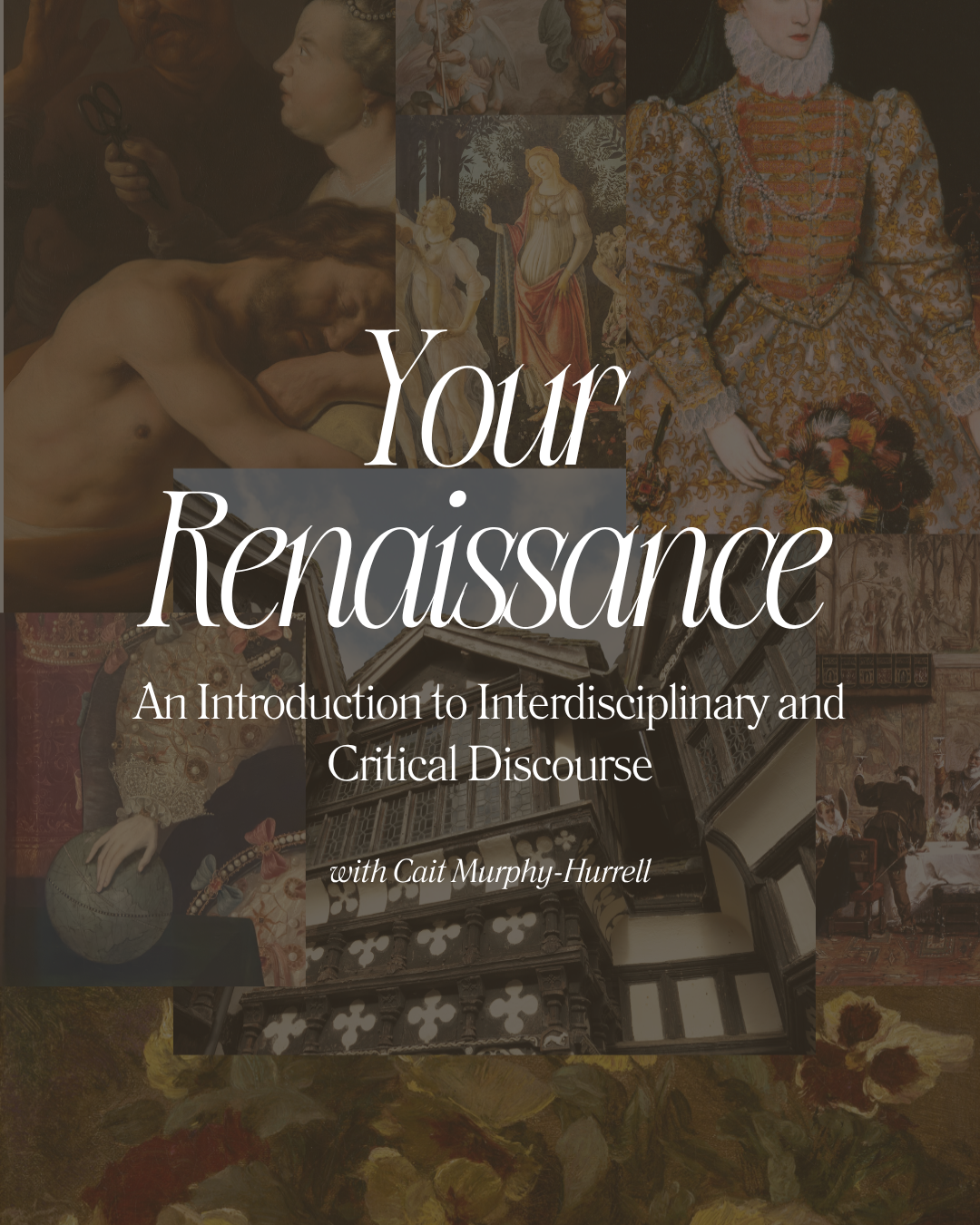
Your Renaissance: An Introduction to Interdisciplinary and Critical Discourse
Your Renaissance: An Introduction to Interdisciplinary and Critical Discourse
Duration: 3 Weeks | 2 Seminars per Week (90 mins each)
Format: Online Interactive Seminars
Level: Introductory / General Adult Education
Course Description
How do we make sense of the human experience across time? History tells us what happened; philosophy asks why it matters; literature explores how it felt; and art reveals how it was imagined. Too often, these fields are taught in isolation, but this is an opportunity to reconnect with your intellectual self as you escape the noise of everyday life.
Designed specifically for lifelong learners, this intensive three-week course introduces the core methods of interdisciplinary study. Anchored around three universal themes: Myth & Power, Beauty & Order, and The Self & The Other, each seminar pairing brings a classical text, a visual masterpiece, and a philosophical inquiry into conversation. Together, we will decode political portraits, trace ancient mythic archetypes, unpack philosophical definitions of harmony, and examine how humans reconstruct meaning after historical upheaval.
Through close readings, visual analysis, and lively seminar discussion, you will gain a practical toolkit for connecting art, literature, history, and philosophy, not only sharpening your critical thinking and transforming how you engage with culture today, but igniting your own Renaissance.
Prerequisites
Being a human being. The English language. No prior study is required.
Course Learning Outcomes
By the end of this course, participants will be able to:
1. Interpret Diverse Cultural Sources
Explain and analyse primary materials across multiple mediums, including literary texts, visual art, material culture, and historical documents.
2. Apply Interdisciplinary Frameworks
Identify connections between historical events, philosophical ideas, and artistic expressions, demonstrating how different disciplines illuminate the same cultural moment.
3. Analyse Symbolism
Decode how authority, identity, and ideology are constructed and communicated through storytelling, visual art, and public ritual across different eras.
4. Evaluate Historical & Humanist Contexts
Situate literary and artistic works within their specific social, political, and philosophical environments rather than reading them in isolation.
5. Practice Critical Synthesis & Self-Reflection
Formulate reasoned, evidence-based arguments in seminar discussions and use classical and early modern humanist perspectives as a mirror to reflect on modern identity, ethics, and culture.
Course Expectations
You will be expected to bring your full analytical rigor to this course, and in doing so you will acquire a transformative framework for reading visual iconography, rhetoric, and power that will permanently alter how you consume history, art, and modern performance.
Course Schedule
Week 1: Myth, Power & Memory
Focus: How societies use story, art, and history to legitimise authority and construct identity.
Session 1: The Anatomy of a Myth
Primary Focus: Classics & Comparative Literature
Anchor Text: Homer’s Odyssey (Book 11: The Underworld) alongside extracts from Virgil’s Aeneid.
The Interdisciplinary Lens: How do ancient oral traditions transform into political epics? We look at how epic poetry functions both as psychological exploration (grief, homecoming) and literary propaganda.
Discussion Core: Why do cultures continually return to the "descent into the underworld" narrative when defining who they are?
Session 2: Painting the Sovereign
Primary Focus: Art History & Renaissance/Early Modern History
Anchor Object: The Sieve Portraits of Queen Elizabeth I (or Holbein’s The Ambassadors).
The Interdisciplinary Lens: Analysing visual iconography alongside political philosophy. We decode how symbolism (eyes and ears on a dress, celestial globes, hidden ciphers) was used as a tool of statecraft and soft power long before modern media.
Discussion Core: How does visual culture perform the work of political theology?
Week 2: Beauty & Order
Focus: How intellectual and artistic movements respond to periods of profound collapse or transformation.
Session 3: The Measure of Perfection
Primary Focus: Classical Philosophy & Sacred Art/Architecture
Anchor Material: Renaissance proportion studies (Vitruvian Man).
The Interdisciplinary Lens: Connecting abstract metaphysics to tangible form. How did classical understandings of geometry, harmony, and virtue shape physical spaces and aesthetic philosophy?
Discussion Core: Is "beauty" an objective harmony we discover, or a cultural construct we invent to cope with chaos?
Session 4: Literature in the Ruins
Primary Focus: 20th-Century History & Modernist Literature
Anchor Text: Excerpts from T.S. Eliot’s The Waste Land
The Interdisciplinary Lens: Examining how shattered historical reality forces a breakdown in traditional artistic form. We explore how fragment, collage, and mythic allusion became the only tools capable of processing modern catastrophe.
Discussion Core: When the world breaks, does art's purpose become repair, or merely bearing witness?
Week 3: The Self & The Other
Focus: How we define human nature, consciousness, and our place in the cosmos.
Session 5: The Invention of the Self
Primary Focus: Educational Literature
Anchor Object: Edmund Spenser’s The Faerie Queene (exerpts)
The Interdisciplinary Lens: Reading literature as an educational tool, combining theology, classical mythology, monster lore, and nascent empirical science.
Discussion Core: How do virtues and vices define the self?
Session 6: The Invention of the Other
Primary Focus: Philosophy & The Essay Form
Anchor Text: Michel de Montaigne’s Essays ("On Cannibals" or "On Experience").
The Interdisciplinary Lens: How the birth of the humanist essay created a new mode of self-examination. Montaigne bridges classical skepticism, radical empathy, and early ethnographic curiosity.
Discussion Core: How does cultivating a personal, questioning voice serve as an act of resistance against dogmatism?
*All sources are free and easily accessible, links will be provided ahead of time
Your Renaissance: An Introduction to Interdisciplinary and Critical Discourse
Duration: 3 Weeks | 2 Seminars per Week (90 mins each)
Format: Online Interactive Seminars
Level: Introductory / General Adult Education
Course Description
How do we make sense of the human experience across time? History tells us what happened; philosophy asks why it matters; literature explores how it felt; and art reveals how it was imagined. Too often, these fields are taught in isolation, but this is an opportunity to reconnect with your intellectual self as you escape the noise of everyday life.
Designed specifically for lifelong learners, this intensive three-week course introduces the core methods of interdisciplinary study. Anchored around three universal themes: Myth & Power, Beauty & Order, and The Self & The Other, each seminar pairing brings a classical text, a visual masterpiece, and a philosophical inquiry into conversation. Together, we will decode political portraits, trace ancient mythic archetypes, unpack philosophical definitions of harmony, and examine how humans reconstruct meaning after historical upheaval.
Through close readings, visual analysis, and lively seminar discussion, you will gain a practical toolkit for connecting art, literature, history, and philosophy, not only sharpening your critical thinking and transforming how you engage with culture today, but igniting your own Renaissance.
Prerequisites
Being a human being. The English language. No prior study is required.
Course Learning Outcomes
By the end of this course, participants will be able to:
1. Interpret Diverse Cultural Sources
Explain and analyse primary materials across multiple mediums, including literary texts, visual art, material culture, and historical documents.
2. Apply Interdisciplinary Frameworks
Identify connections between historical events, philosophical ideas, and artistic expressions, demonstrating how different disciplines illuminate the same cultural moment.
3. Analyse Symbolism
Decode how authority, identity, and ideology are constructed and communicated through storytelling, visual art, and public ritual across different eras.
4. Evaluate Historical & Humanist Contexts
Situate literary and artistic works within their specific social, political, and philosophical environments rather than reading them in isolation.
5. Practice Critical Synthesis & Self-Reflection
Formulate reasoned, evidence-based arguments in seminar discussions and use classical and early modern humanist perspectives as a mirror to reflect on modern identity, ethics, and culture.
Course Expectations
You will be expected to bring your full analytical rigor to this course, and in doing so you will acquire a transformative framework for reading visual iconography, rhetoric, and power that will permanently alter how you consume history, art, and modern performance.
Course Schedule
Week 1: Myth, Power & Memory
Focus: How societies use story, art, and history to legitimise authority and construct identity.
Session 1: The Anatomy of a Myth
Primary Focus: Classics & Comparative Literature
Anchor Text: Homer’s Odyssey (Book 11: The Underworld) alongside extracts from Virgil’s Aeneid.
The Interdisciplinary Lens: How do ancient oral traditions transform into political epics? We look at how epic poetry functions both as psychological exploration (grief, homecoming) and literary propaganda.
Discussion Core: Why do cultures continually return to the "descent into the underworld" narrative when defining who they are?
Session 2: Painting the Sovereign
Primary Focus: Art History & Renaissance/Early Modern History
Anchor Object: The Sieve Portraits of Queen Elizabeth I (or Holbein’s The Ambassadors).
The Interdisciplinary Lens: Analysing visual iconography alongside political philosophy. We decode how symbolism (eyes and ears on a dress, celestial globes, hidden ciphers) was used as a tool of statecraft and soft power long before modern media.
Discussion Core: How does visual culture perform the work of political theology?
Week 2: Beauty & Order
Focus: How intellectual and artistic movements respond to periods of profound collapse or transformation.
Session 3: The Measure of Perfection
Primary Focus: Classical Philosophy & Sacred Art/Architecture
Anchor Material: Renaissance proportion studies (Vitruvian Man).
The Interdisciplinary Lens: Connecting abstract metaphysics to tangible form. How did classical understandings of geometry, harmony, and virtue shape physical spaces and aesthetic philosophy?
Discussion Core: Is "beauty" an objective harmony we discover, or a cultural construct we invent to cope with chaos?
Session 4: Literature in the Ruins
Primary Focus: 20th-Century History & Modernist Literature
Anchor Text: Excerpts from T.S. Eliot’s The Waste Land
The Interdisciplinary Lens: Examining how shattered historical reality forces a breakdown in traditional artistic form. We explore how fragment, collage, and mythic allusion became the only tools capable of processing modern catastrophe.
Discussion Core: When the world breaks, does art's purpose become repair, or merely bearing witness?
Week 3: The Self & The Other
Focus: How we define human nature, consciousness, and our place in the cosmos.
Session 5: The Invention of the Self
Primary Focus: Educational Literature
Anchor Object: Edmund Spenser’s The Faerie Queene (exerpts)
The Interdisciplinary Lens: Reading literature as an educational tool, combining theology, classical mythology, monster lore, and nascent empirical science.
Discussion Core: How do virtues and vices define the self?
Session 6: The Invention of the Other
Primary Focus: Philosophy & The Essay Form
Anchor Text: Michel de Montaigne’s Essays ("On Cannibals" or "On Experience").
The Interdisciplinary Lens: How the birth of the humanist essay created a new mode of self-examination. Montaigne bridges classical skepticism, radical empathy, and early ethnographic curiosity.
Discussion Core: How does cultivating a personal, questioning voice serve as an act of resistance against dogmatism?
*All sources are free and easily accessible, links will be provided ahead of time